 By Nationwide News Writer
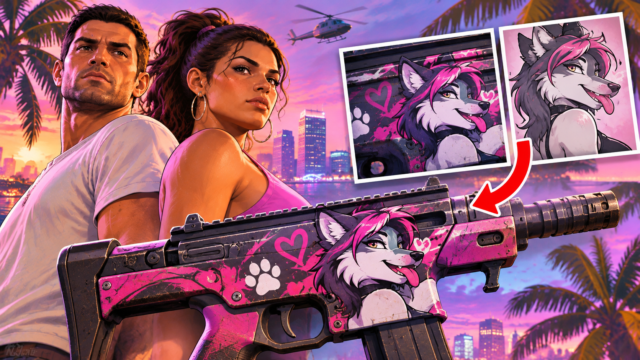
Rockstar Games is facing criticism from members of the Grand Theft Auto 6 community after players discovered striking similarities between an unlockable weapon decal and an illustration published by an independent artist in 2021.
The controversy centers on a furry-themed submachine gun skin reportedly discovered within GTA 6. What initially appeared to be a creative reference to the furry community quickly developed into a debate over artistic ownership, copyright protection and whether the original creator received compensation.
According to a November 22, 2026, report from The Nerd Stash, social media users began questioning the origins of the artwork after comparing the in-game design with an existing illustration by artist GabyT.
Neither the alleged unauthorized use nor a copyright violation has been established by the comparisons alone.
GTA 6 Weapon Decal Sparks Plagiarism Accusations
The controversy began when an X user known as TaurineYeen shared images of a furry-themed weapon decal reportedly discovered through GTA 6 datamining.
The discovery initially generated excitement among members of the furry community. Rockstar Games has a reputation for incorporating cultural references, internet humor and unexpected details into its open-world titles.
However, the conversation changed when another social media user, sockzthepuppet, recognized similarities between the weapon decal and an illustration created by GabyT.
The user compared the two designs by overlaying the images, drawing attention to similarities that raised questions about whether Rockstar Games had obtained permission to incorporate the artwork.
The original illustration reportedly dates back to 2021, several years before the reported appearance of the weapon skin in GTA 6.
Fans Question Whether Rockstar Games Paid the Original Artist
Following the discovery, social media users began discussing whether GabyT had authorized the use of the illustration or received compensation from Rockstar Games.
Some fans argued that the similarities were too significant to dismiss without further explanation. Others called for the weapon decal to be removed if the artwork was used without permission.
Independent artists frequently rely on commissions, licensing agreements and digital artwork sales to generate income. When their creations appear in commercial entertainment products, questions about authorization and compensation can become particularly important.
GTA 6 represents a major commercial project, making the allegations especially concerning to members of the independent art community.
However, no publicly disclosed licensing agreement or other evidence establishing unauthorized use was identified in the supplied report.
GTA 6 Community Divided Over Artwork Similarities
Not everyone examining the images reached the same conclusion. While some players believed the comparison suggested possible tracing, others argued that the designs contained enough differences to challenge that interpretation.
Several commenters suggested that Rockstar Games may have commissioned the artwork or obtained permission through a private licensing agreement.
Others speculated that the original artist could be subject to a confidentiality agreement preventing public discussion of the project. However, no evidence supporting that explanation has been presented.
The disagreement illustrates the difficulty of determining whether artwork has been copied simply by examining visual similarities.
Establishing plagiarism or copyright infringement generally requires more information about the original work, the development process and any agreements between the parties involved.
Did the GTA 6 Artwork Slip Through Development Unnoticed?
The size of GTA 6 has also become part of the discussion surrounding the weapon decal.
Large open-world video games contain thousands of individual assets, including clothing designs, advertisements, vehicle decorations, character models, environmental textures and weapon customization options.
These elements may be produced by internal development teams, independent contractors or external creative studios.
Some fans suggested that the sheer volume of content included in GTA 6 could make it difficult for every developer or supervisor to review every individual design.
Although this remains speculation, the discussion raises broader questions about how major video game companies verify the origins of artwork used throughout their projects.
The responsibility for reviewing intellectual property permissions becomes increasingly important as development teams grow and production involves more outside contributors.
What Is the Furry DW-9 in GTA 6?
The weapon at the center of the controversy is reportedly known as the Furry DW-9, a unique variation of the Schlamm DW-9 Longarm submachine gun.
Unlike standard weapon variations, the Furry DW-9 features decorative artwork associated with anthropomorphic animal characters, commonly recognized within the furry community.
The design reportedly forms part of a larger collection of unusual encounters, character references and humorous details scattered throughout Leonida.
According to the original report, players can obtain the weapon through a random encounter in the Vice City area.
The unusual customization option has attracted attention beyond its gameplay value because of the ongoing debate surrounding the origins of its artwork.
How to Unlock the Furry DW-9 in GTA 6
Players looking for the Furry DW-9 reportedly need to encounter a character wearing a fursuit during a random event in Vice City.
The encounter involves helping the character escape pursuing police officers. Completing the event reportedly provides access to the exclusive weapon variant.
Unlike equipment purchased through ordinary weapon stores, this particular reward is associated with an optional encounter that players may discover while exploring the city.
Players interested in collecting rare weapons should pay attention to random events rather than focusing exclusively on main story missions.
The reported encounter also reflects Rockstar’s tradition of incorporating unusual characters and satirical situations into the Grand Theft Auto universe.
Rockstar Games and the Debate Over Artistic Ownership
The GTA 6 controversy is not the first time a major video game developer has faced accusations involving artwork created by independent artists.
The Call of Duty franchise previously attracted criticism after an operator skin was compared with an existing illustration featuring an anthropomorphic wolf.
Incidents like these have increased awareness of intellectual property rights throughout the gaming industry.
Independent artists can face significant challenges when attempting to determine whether their work has been incorporated into commercial products without permission. They may lack the financial resources available to major entertainment companies when disputes arise.
At the same time, similarities between two designs do not necessarily prove that unauthorized copying occurred.
Licensing arrangements, commissioned artwork and independently developed designs can complicate public comparisons. Without additional information, determining the circumstances surrounding the GTA 6 decal remains difficult.
GTA 6 Controversy Raises Questions About AI and Original Artwork
Some social media users also questioned whether artificial intelligence may have played a role in creating the weapon decal.
The speculation reflects wider concerns throughout the gaming industry about generative AI, artistic originality and the treatment of independent creators.
However, there is no confirmed evidence in the supplied reporting that Rockstar Games used artificial intelligence to produce the disputed design.
The discussion demonstrates how quickly questions about artwork ownership can expand into broader debates about creative technology and the future of professional illustration.
For many artists, transparency surrounding how commercial artwork is produced remains an important issue, regardless of whether traditional illustration tools or newer technologies are involved.
Has Rockstar Games Responded to the GTA 6 Plagiarism Allegations?
As of the November 22 report, GabyT had not publicly addressed the controversy. The report also did not identify an official response from Rockstar Games explaining the origins of the weapon decal.
Without statements from the parties involved, questions about authorization, compensation and the development of the artwork remain unanswered.
An official explanation could clarify whether the design was licensed, commissioned, independently created or incorporated under other circumstances.
Until additional evidence becomes available, the accusations remain unproven.
The controversy has nevertheless placed renewed attention on artistic ownership within the gaming industry. As developers continue producing increasingly detailed virtual worlds, the importance of respecting independent creators and maintaining transparent artwork approval processes is likely to remain a significant topic of discussion among gamers and artists alike.