 By Nationwide News Writer
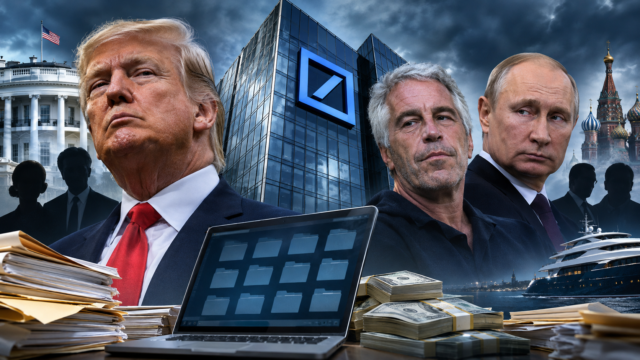
A massive leak of more than 15 million internal Deutsche Bank records has exposed previously undisclosed details about the German banking giant’s financial relationships with US President Donald Trump, convicted sex offender Jeffrey Epstein, Russian oligarchs and some of the world’s wealthiest individuals.
The revelations have placed Germany’s largest financial institution under renewed international scrutiny, raising serious questions about its handling of suspicious transactions, politically connected clients and internal warnings concerning potential financial crimes.
The international investigation, titled Inside Deutsche Bank, was published on November 17, 2026. According to reporting attributed to The New York Times and other participating news organizations, the leaked documents provide an extensive look at the bank’s historical business practices and relationships with high-risk customers.
More Than 15 Million Deutsche Bank Records Leaked
The leaked documents include internal emails, financial crime reports, meeting minutes, customer evaluations and due diligence records. Together, they offer an unusually detailed look inside one of the world’s largest financial institutions.
Two whistleblowers reportedly obtained the material and shared it with Indian investigative journalist Josy Joseph and South African investigative journalist Khadija Sharife. They believed the documents contained evidence of serious wrongdoing and that releasing the information served the public interest.
More than 230 journalists representing over 50 media organizations participated in the international investigation. The whistleblowers also reportedly provided documents to United States authorities and Britain’s tax agency.
The investigation raises questions about whether Deutsche Bank adequately investigated suspicious financial activity and how its pursuit of wealthy customers influenced internal decisions regarding financial risks.
Deutsche Bank Leak Reveals Donald Trump’s Financial Connections
Among the most politically significant findings are records concerning Trump’s businesses and his longstanding financial relationship with Deutsche Bank.
The leaked documents reportedly identify more than $3 million in transactions involving Trump-owned businesses, including activity connected to suspected money laundering networks involving Russian and Azerbaijani funds.
The reported transactions do not independently establish that Trump or his businesses knowingly participated in money laundering.
Deutsche Bank remained a significant lender to Trump despite financial difficulties and bankruptcies involving several of his business ventures. By January 2021, the institution reportedly held approximately $340 million in outstanding loans connected to Trump-owned companies.
The lending relationship ended following the January 6, 2021, attack on the US Capitol. However, the newly disclosed records have renewed public interest in the bank’s previous dealings with Trump and its assessment of the financial risks associated with his businesses.
Trump Tax Document Reportedly Sent to Another Client
The investigation also uncovered an apparent breach of confidentiality involving Trump’s personal financial information during his first presidential term.
In 2017, Deutsche Bank reportedly sent one of Trump’s tax documents to an accountant representing another customer. According to the investigation, the bank did not inform Trump about the disclosure.
Trump criticized the reported incident during a visit to Manila, describing the release of his financial information as illegal. Deutsche Bank reportedly declined to comment on his remarks.
The incident raises separate concerns about the institution’s historical handling of confidential customer information and its procedures for reporting unauthorized disclosures.
$582 Million in Suspicious Transactions Linked to Jeffrey Epstein
Some of the investigation’s most troubling allegations concern Deutsche Bank’s financial relationship with Jeffrey Epstein, who became a customer in 2013 despite his previous conviction for offenses involving a minor.
According to the leaked records, approximately $582 million in transactions associated with Epstein were internally identified as suspicious. The reported figure exceeds amounts previously highlighted in investigations into Epstein’s banking relationships.
Internal communications reportedly show that senior officials approved Epstein’s relationship with Deutsche Bank despite knowledge of his criminal history. The bank maintained his accounts for approximately five years, until 2018.
The documents also reportedly contain internal warnings involving Ghislaine Maxwell, Epstein’s longtime associate. Maxwell was convicted in 2021 for her role in Epstein’s sexual abuse of underage girls and received a 20-year prison sentence.
The findings raise questions about whether stronger financial oversight could have identified or disrupted financial activity connected to Epstein earlier.
Billionaires and Other Powerful Clients Appear in Leaked Files
The Deutsche Bank documents also reportedly contain financial records involving billionaire investor Leon Black and financier Glenn Dubin, both of whom have previously faced public scrutiny over their associations with Epstein.
Black has acknowledged paying Epstein for tax and estate planning services while denying involvement in Epstein’s criminal activities.
However, appearing in leaked banking records or maintaining a financial relationship with Epstein does not automatically establish criminal conduct.
The broader investigation examines how international financial institutions evaluate wealthy customers whose personal associations, business activities or transaction histories may present elevated compliance risks.
Russian Oligarchs and Deutsche Bank’s International Operations
Deutsche Bank’s historical relationships with Russian oligarchs and politically connected business figures represent another major area of the investigation.
The leaked documents reportedly show that the institution continued pursuing Russian business opportunities before Russia’s full-scale invasion of Ukraine in February 2022, despite internal concerns surrounding regulatory exposure and potential money laundering.
Records allegedly detail discussions about expanding Russian operations and difficulties associated with evaluating customers who maintained close political connections.
In March 2022, Deutsche Bank announced that it would wind down its remaining Russian business operations and stop accepting new business in the country.
The revelations have renewed questions about whether internal compliance warnings received sufficient consideration before the invasion.
European authorities have increasingly focused on preventing sanctioned individuals and companies from using international banking networks to conceal assets or move money across borders.
German Authorities Examine Deutsche Bank Revelations
The investigation has generated political and regulatory reactions in Germany, where Deutsche Bank maintains its headquarters.
German Finance Minister Lars Klingbeil reportedly called for transparency regarding the institution’s previous failures, its handling of internal warnings and measures introduced to prevent similar problems.
He also called for appropriate scrutiny by regulators and law enforcement authorities.
Meanwhile, the data protection authority in Hesse reportedly launched an investigation into the circumstances surrounding the leak. Authorities are examining whether Deutsche Bank adequately protected sensitive information, complied with reporting obligations and notified affected individuals within required timeframes.
The inquiries could increase pressure on the institution to demonstrate that its existing security procedures meet regulatory requirements.
US and European Lawmakers Demand Accountability
The Deutsche Bank revelations have also attracted attention from political leaders outside Germany.
US Senator Elizabeth Warren reportedly called for accountability regarding the suspicious transactions linked to Epstein. European lawmakers have similarly questioned whether Deutsche Bank’s historical compliance failures have been adequately addressed.
European Parliament member Rasmus Andresen reportedly called for the bank’s chief executive to answer questions about the investigation and the institution’s claims of substantial operational reforms.
The political response highlights growing concerns about whether international banks apply consistent financial crime prevention standards to ordinary customers, billionaires and politically influential individuals.
Deutsche Bank Responds to the International Investigation
Deutsche Bank has pushed back against suggestions that the leaked documents accurately represent its current operations, emphasizing that many of the reported incidents occurred years or decades ago.
The institution said it previously reviewed relevant matters and cooperated with regulatory authorities where necessary.
Deutsche Bank also reportedly invested approximately €7 billion between 2019 and 2025 to improve financial crime prevention, regulatory compliance and internal risk management.
Chief Executive Christian Sewing, who has led the institution since 2018, indicated that customers had reacted calmly to the disclosures and that the investigation had not meaningfully affected business operations.
Despite these assurances, the scale of the Deutsche Bank leak presents significant questions about the effectiveness of internal oversight and accountability within major financial institutions.
Further scrutiny of the millions of leaked records could reveal additional information about the bank’s historical relationships with political leaders, billionaires, international business networks and other influential customers.