 By Nationwide News Writer
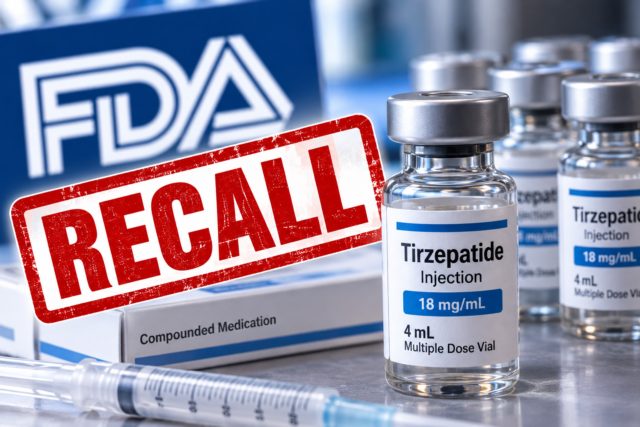
A nationwide recall involving compounded weight loss medications has raised safety concerns for patients who use injectable GLP-1 drugs.
The U.S. Food and Drug Administration (FDA) has announced a recall involving products made by Apothecary Pharma LLC, a compounding pharmacy based in Cary, North Carolina.
The recall covers 22 listed lots of compounded tirzepatide injections and one lot of NAD+ injections. Federal regulators identified concerns about whether the products were manufactured under conditions that ensured sterility.
The nationwide GLP-1 drug recall is especially important for patients using compounded versions of tirzepatide, the active ingredient found in the brand-name medications Mounjaro and Zepbound.
Although no illnesses had been reported in connection with the recall as of the October 23 report, patients are being encouraged to check their medications carefully.
Why Did the FDA Recall These Weight Loss Drugs?
The FDA classified the recall as Class II, which means using an affected product could cause temporary or medically reversible health problems. The classification also indicates that serious health consequences are considered unlikely.
The main concern involves sterility. Injectable medications must be prepared and handled carefully to prevent harmful microorganisms from entering the product. When sterility cannot be assured, there is a possibility that contamination could occur.
This does not mean every recalled vial is contaminated. It means the manufacturer cannot provide adequate assurance that the products meet required sterility standards. The nationwide GLP-1 drug recall involves specific compounded products, not every medication containing tirzepatide.
Which GLP-1 Medications Are Being Recalled?
The affected tirzepatide medication was manufactured by Apothecary Pharma LLC.
Patients should check the following product information:
- Medication: Tirzepatide Injection
- Strength: 18 mg/mL
- Vial size: 4 mL sterile multi-dose vial
- Prescription status: Prescription only
- Manufacturer: Apothecary Pharma LLC
- Manufacturer address: 1913 Evans Road, Cary, NC 27513
- National Drug Code (NDC): 85091-001-18
The recall also includes one lot of NAD+ injections, which are not GLP-1 medications.
Anyone who receives compounded injectable medications should compare the information on their prescription label and vial with the recalled products.
Complete List of Recalled Tirzepatide Lot Numbers
The nationwide GLP-1 drug recall includes the following 22 tirzepatide lots.
The BUD, or beyond-use date, identifies the date after which a compounded medication should not be used.
| Lot number | Beyond-use date (BUD) |
|---|---|
| AP-202622 | October 7, 2026 |
| AP-202623 | October 8, 2026 |
| AP-202624 | October 19, 2026 |
| AP-202625 | October 20, 2026 |
| AP-202627 | October 26, 2026 |
| AP-202628 | October 27, 2026 |
| AP-202629 | October 28, 2026 |
| AP-202630 | October 31, 2026 |
| AP-202631 | November 1, 2026 |
| AP-202632 | November 3, 2026 |
| AP-202633 | November 7, 2026 |
| AP-202634 | November 8, 2026 |
| AP-202635 | November 16, 2026 |
| AP-202636 | November 17, 2026 |
| AP-202637 | November 18, 2026 |
| AP-202638 | November 19, 2026 |
| AP-202639 | November 20, 2026 |
| AP-202640 | November 21, 2026 |
| AP-202641 | November 22, 2026 |
| AP-202642 | November 24, 2026 |
| AP-202643 | November 25, 2026 |
| AP-202644 | November 26, 2026 |
Patients should check the lot number printed on their medication packaging. Even if a medication looks normal, it should not be used if its lot number matches the recall.
One NAD+ Injection Lot Is Also Recalled
In addition to tirzepatide, the recall includes a separate compounded NAD+ injectable product.
The affected product information is:
- Medication: NAD+ Injection
- Strength: 200 mg/mL
- Vial size: 6 mL sterile multi-dose vial
- Manufacturer: Apothecary Pharma LLC
- NDC: 85091-011-06
- Lot number: AP-202647
- Beyond-use date: October 13, 2026
NAD+ injections are different from GLP-1 medications. However, they were included in the same recall because of sterility concerns. The nationwide GLP-1 drug recall therefore covers 23 listed lots across two types of injectable products.
What Should Patients Do If They Have a Recalled Vial?
Patients who discover that their medication matches one of the recalled lots should avoid using the affected vial until they receive guidance from their pharmacist or healthcare provider.
The FDA recall listing did not provide detailed instructions for patients about returning or disposing of the medication.
Patients can take several precautions:
- Check the medication label for the manufacturer, strength, NDC, and lot number.
- Contact the prescribing healthcare provider or dispensing pharmacy if the product matches.
- Ask whether a replacement medication is needed before the next scheduled dose.
- Watch for unusual symptoms, including fever, increasing redness, swelling, or pain around an injection site.
- Seek prompt medical attention for possible signs of infection, especially fever or worsening symptoms after an injection.
Patients using tirzepatide for diabetes should also discuss how to maintain blood sugar control if their treatment is interrupted.
The nationwide GLP-1 drug recall does not mean patients should independently change doses or switch to another injectable medication.
Apothecary Pharma Previously Received an FDA Warning
This is not the first time federal regulators have raised concerns about Apothecary Pharma’s manufacturing practices. In December 2025, the FDA issued a warning letter describing problems involving the preparation and handling of medications intended to be sterile.
Inspectors identified conditions that could potentially expose drug products to contamination. Those findings raised questions about whether the company’s sterile manufacturing procedures provided adequate patient protection. However, the FDA has not established that the earlier inspection findings directly caused the current recall.
The nationwide GLP-1 drug recall has renewed attention on the safety standards followed by compounding facilities.
Are Mounjaro and Zepbound Included in the Recall?
Patients using FDA-approved Mounjaro or Zepbound should know that those brand-name medications are not part of this specific recall. Both contain tirzepatide, but the recalled products are compounded injections manufactured by Apothecary Pharma.
Compounding pharmacies prepare customized medications for patients with particular medical needs. Unlike FDA-approved medications, compounded drugs do not undergo the same premarket review for safety, effectiveness, and manufacturing quality. This difference makes careful oversight especially important.
The nationwide GLP-1 drug recall applies only to the specified products and lot numbers, not every GLP-1 medication sold in the United States.
What Happens Next With the Recall?
Apothecary Pharma began the voluntary recall on September 24, 2026. The FDA classified it as Class II on October 8, and the recall remained ongoing as of October 23. Federal records identify 22 tirzepatide vials and one NAD+ vial affected by the recall.
No illnesses or injuries had been reported in the available recall information. For patients, the most important step is checking medication labels and contacting a healthcare professional if their vial matches an affected lot. The nationwide GLP-1 drug recall serves as a reminder that injectable medications require strict manufacturing safeguards. Patients who rely on these treatments deserve clear information about possible risks and how to continue their care safely. As the recall continues, anyone using compounded tirzepatide from Apothecary Pharma should remain alert to further safety instructions.
Recall information current as of October 23, 2026. FDA recall numbers: D-0036-2027 and D-0037-2027.