 By Breaking News Reporter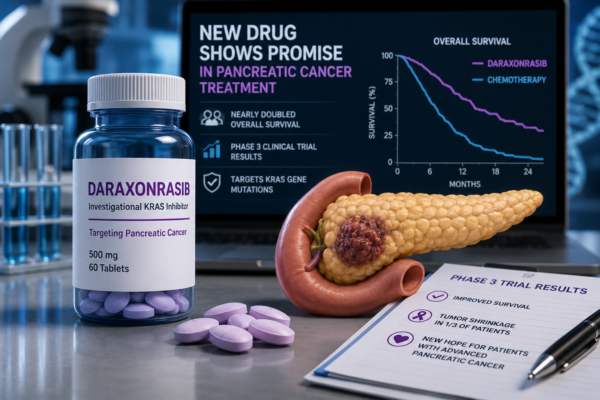
A new pancreatic cancer drug is generating excitement among researchers and physicians after clinical trial results showed it could significantly extend the lives of patients with one of the deadliest forms of cancer.
The experimental medication, called daraxonrasib, nearly doubled overall survival rates for patients with advanced pancreatic cancer compared to standard chemotherapy. The findings were presented at the annual meeting of the American Society of Clinical Oncology and are being viewed as one of the most encouraging developments in pancreatic cancer treatment in years.
For a disease that has long carried a grim outlook, the results are offering patients and their families something that has often been in short supply: hope.
Why Pancreatic Cancer Is So Difficult to Treat
Pancreatic cancer remains one of the most challenging cancers to diagnose and treat. Symptoms often do not appear until the disease has already spread, making early detection extremely difficult.
The most common form of the disease, pancreatic ductal adenocarcinoma, accounts for the vast majority of pancreatic cancer cases. Many patients are diagnosed only after the cancer has spread to other organs, limiting treatment options and reducing survival rates.
Once the disease reaches an advanced stage, the five-year survival rate falls dramatically. For patients whose cancer has spread throughout the body, long-term survival remains extremely rare.
That reality is why the development of this pancreatic cancer drug has attracted so much attention throughout the medical community.
Trial Results Exceed Expectations
Researchers studied approximately 500 patients with advanced pancreatic cancer during the Phase 3 clinical trial. Participants had already received previous treatment and were battling metastatic disease.
Half of the patients received the pancreatic cancer drug while the remaining participants were treated with standard chemotherapy.
The results were striking.
Patients taking daraxonrasib survived an average of 13.2 months, compared with 6.7 months for those receiving chemotherapy. While that may seem like a modest difference to some, experts say nearly doubling survival time in advanced pancreatic cancer is a major achievement.
Researchers also found that the drug slowed disease progression. Patients receiving the treatment lived an average of 7.2 months before their cancer worsened, compared with 3.6 months among chemotherapy patients.
For many oncologists, these numbers represent a significant breakthrough.
How the Drug Works
The pancreatic cancer drug targets a gene known as KRAS.
Mutations in KRAS are found in more than 90 percent of pancreatic cancer patients. The gene has long been considered one of the most important drivers of cancer growth, but for decades researchers struggled to find a way to target it effectively.
Scientists often referred to KRAS as “undruggable” because of its structure. The protein lacked obvious locations where medications could attach and interfere with its activity.
That changed when researchers discovered a previously unknown pocket within the KRAS protein. The discovery opened the door to a new generation of targeted therapies, including daraxonrasib.
Today, the pancreatic cancer drug is among the most advanced examples of how that research is beginning to transform patient care.
Tumors Shrink in Many Patients
One of the most encouraging findings involved tumor response rates.
Researchers reported that roughly one-third of patients receiving the pancreatic cancer drug experienced significant tumor shrinkage. In many cases, tumors decreased in size by at least 30 percent.
For patients facing advanced pancreatic cancer, shrinking tumors can improve quality of life, reduce symptoms, and potentially create opportunities for additional treatment options.
Doctors say the results demonstrate that the medication is doing more than simply slowing disease progression. It is actively attacking cancer cells in a meaningful way.
Side Effects Remain a Challenge
Like most cancer treatments, the pancreatic cancer drug is not without risks.
Patients reported side effects including fatigue, nausea, diarrhea, inflammation of the digestive tract, and skin rashes. Severe side effects occurred in approximately 62 percent of patients during the Phase 3 trial.
While that number may sound concerning, experts note that severe side effects were also common among chemotherapy patients, where rates approached 70 percent.
Doctors emphasize that treatment decisions must always balance potential benefits against possible risks. For many patients with advanced disease, the survival gains offered by the pancreatic cancer drug may outweigh the side effects.
Questions About Cost and Access
Despite the promising results, challenges remain before the treatment becomes widely available.
The Food and Drug Administration recently granted expanded access approval, allowing some eligible patients to receive the medication. However, many physicians still cannot easily obtain the drug for their patients.
Cost is another major concern.
Targeted cancer therapies are often expensive, sometimes costing tens of thousands of dollars per month. Since daraxonrasib is taken daily, patients may require hundreds of pills over the course of treatment.
Experts worry that insurance coverage and affordability could become significant barriers if pricing is not carefully managed.
Access disparities between large academic medical centers and smaller community clinics could also limit who benefits from the new pancreatic cancer drug.
A Potential Shift in Treatment
Researchers are already looking beyond the current trial results.
Many believe the pancreatic cancer drug could become even more effective if used earlier in treatment rather than waiting until after chemotherapy has failed. Future studies will examine whether combining the medication with surgery, immunotherapy, or other targeted treatments can further improve outcomes.
The goal is not simply extending survival but improving quality of life while helping patients live longer.
Scientists hope this approach will eventually create multiple treatment options that work together to control the disease more effectively.
Looking Toward the Future
For decades, pancreatic cancer has remained one of the most feared diagnoses in medicine. Progress has often been slow, leaving patients with limited treatment choices and poor long-term outcomes.
The emergence of daraxonrasib suggests that may finally be changing.
While no one is calling it a cure, the pancreatic cancer drug represents one of the most significant advances the field has seen in years. Researchers believe it marks the beginning of a new era of targeted therapies aimed at the genetic drivers behind some of the world’s deadliest cancers.
For patients and families facing pancreatic cancer today, that progress offers something invaluable: a reason to believe that better treatments are on the horizon. As additional research continues, doctors remain hopeful that daraxonrasib may be only the first step toward transforming how pancreatic cancer is treated in the future.