 By Breaking News Reporter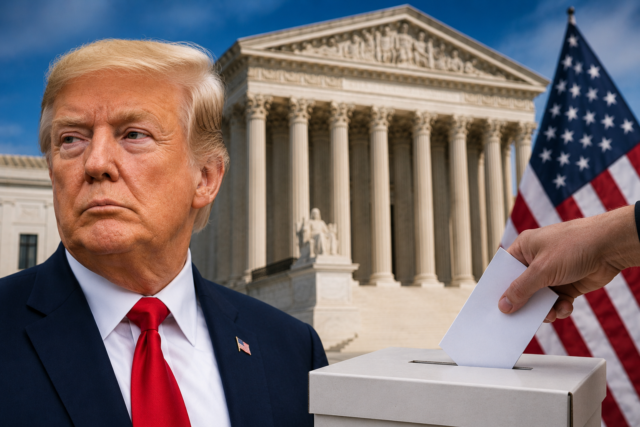
President Donald Trump faced a series of legal and political setbacks Monday as the Supreme Court and Congress limited parts of his effort to reshape federal election laws. While the president celebrated a major victory expanding presidential authority over federal agencies, his push for stricter voting rules suffered another blow.
The latest developments have added new obstacles to the Trump election voting restrictions agenda, one of the administration’s top priorities since returning to office.
Supreme Court Upholds Mississippi Ballot Law
In a narrow 5 to 4 decision, the Supreme Court rejected a challenge brought by the Republican National Committee against a Mississippi law that allows certain mail ballots to be counted after Election Day if they were mailed on time.
Chief Justice John Roberts and Justice Amy Coney Barrett joined the court’s three liberal justices to form the majority. The ruling allows states to continue counting eligible ballots received after Election Day under existing state law.
The decision represents a significant setback for the Trump election voting restrictions effort, which has focused on tightening election rules across the country.
Trump Calls the Decision Harmful
Trump criticized the ruling shortly after it was announced, arguing that allowing ballots to arrive after Election Day could lead to illegal voting. He has continued to claim, without evidence, that widespread election fraud affected the 2020 presidential election.
Following the decision, Trump renewed his call for Congress to pass the SAVE America Act. The proposed legislation would require multiple forms of identification to register to vote and photo identification when casting a ballot.
The bill remains stalled in the Senate, where Republicans do not currently have enough votes to overcome the chamber’s 60 vote filibuster requirement. That leaves another major obstacle for the Trump election voting restrictions proposal.
Senate Faces Growing Pressure
Trump also increased pressure on several Republican senators who have not committed to supporting the legislation. He urged lawmakers to move quickly, arguing stronger voter identification laws are necessary to protect future elections.
Supporters of the legislation say it would improve election security by verifying voter eligibility. Critics argue the requirements could make voting more difficult for eligible Americans and reduce voter participation.
As debate continues in Washington, the future of the Trump election voting restrictions package remains uncertain.
Trump Wins Major Executive Power Case
Although the president suffered setbacks on election policy, he secured an important victory from the Supreme Court in another case.
The justices ruled that presidents have broad authority to remove officials serving in many independent federal agencies. The decision overturned a legal precedent that had been in place for more than 90 years and significantly expands presidential control over executive branch appointments.
However, the court also ruled that Federal Reserve Governor Lisa Cook could remain in her position for now, finding that members of the Federal Reserve Board are protected under a different legal standard.
Other High Profile Cases Still Ahead
The Supreme Court is expected to issue additional rulings that could have major political consequences. The justices are preparing to decide whether Trump’s executive order ending automatic birthright citizenship for some children born in the United States can take effect.
The court is also expected to rule on whether state bans preventing transgender athletes from competing in girls’ and women’s school sports are constitutional.
Both decisions could shape key issues that were central to Trump’s 2024 campaign and will likely influence national political debates moving forward.
Carroll Appeal Also Rejected
Monday also brought another legal setback for Trump when the Supreme Court declined to hear his appeal in the civil lawsuit filed by writer E. Jean Carroll.
That decision leaves in place the jury’s finding that Trump is liable for sexually abusing and defaming Carroll, along with the $5 million judgment awarded in the case.
Election Debate Continues
The Supreme Court’s latest decisions delivered mixed results for President Trump. While his authority over much of the executive branch expanded, his efforts to tighten election rules through the courts and Congress continue to face significant challenges.
With additional Supreme Court rulings still expected and key legislation stalled in the Senate, the future of the Trump election voting restrictions agenda remains one of the biggest legal and political battles facing the administration. As those cases move forward, the Trump election voting restrictions debate is expected to remain at the center of the national conversation.