 By Breaking News Reporter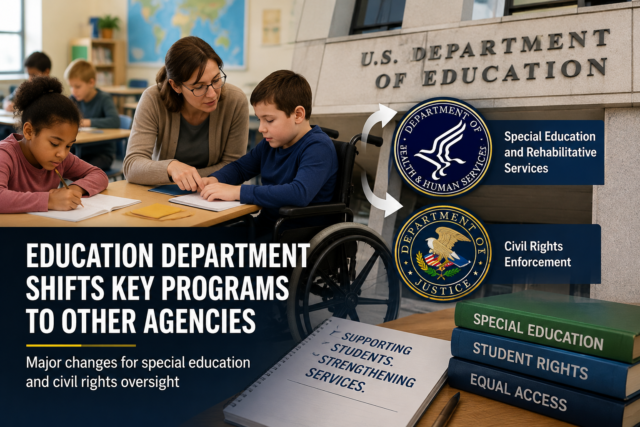
The Trump administration has announced a major restructuring effort involving the U.S. Department of Education. The move will transfer key responsibilities related to special education and civil rights enforcement to other federal agencies, a decision that is already generating strong reactions from both supporters and critics.
The Education Department special education changes were announced by Education Secretary Linda McMahon, who said the goal is to place programs under agencies that are better equipped to manage them. Under the plan, the Office of Special Education and Rehabilitative Services will work through an agreement with the Department of Health and Human Services.
At the same time, the Office for Civil Rights will begin shifting some of its anti-discrimination responsibilities to the Department of Justice.
What Is Changing?
The Education Department special education changes represent one of the most significant adjustments to the agency in years. Federal officials say students and families should not experience interruptions in services as the transition takes place.
Health and Human Services Secretary Robert F. Kennedy Jr. stated that his department will continue protecting the rights of individuals with disabilities. Justice Department officials also said they plan to strengthen civil rights enforcement efforts through greater coordination between agencies.
Administration officials argue that these changes will streamline services and reduce unnecessary bureaucracy.
Supporters Welcome the Move
Republican lawmakers and some former Education Department officials have praised the restructuring effort.
Supporters believe the Education Department special education changes could create a more efficient system for addressing disability services and civil rights complaints. They argue that placing programs within agencies that already handle related issues may improve response times and coordination.
Some officials also point to concerns about growing backlogs and staffing challenges that have affected the Education Department in recent years.
Critics Voice Concerns
Not everyone agrees with the administration’s approach.
Education advocates, union leaders, and disability rights organizations have expressed concerns that the changes could weaken protections for vulnerable students. Critics fear that moving programs between agencies could create confusion for families seeking assistance or filing complaints.
Opponents of the Education Department special education changes argue that the transition may make it harder for students with disabilities to access the support and protections guaranteed under federal law.
Several advocacy groups have warned that implementation will be critical to ensuring services remain available without disruption.
Part of a Larger Restructuring Effort
The latest announcement is part of a broader effort to reduce the size and role of the Department of Education.
Since 2025, the agency has undergone significant workforce reductions. Officials have also entered into several agreements with other federal departments to transfer responsibilities traditionally handled within the Education Department.
The Education Department special education changes are viewed by many observers as another major step in that ongoing process.
Families Await More Details
Many educators and parents are now waiting to learn exactly how the transition will work in practice.
Federal officials say they spent months speaking with families and stakeholders before reaching their decision. According to department leaders, many parents expressed frustration with bureaucratic hurdles that can slow access to services.
Whether the Education Department special education changes ultimately improve outcomes or create additional challenges remains a subject of debate.
Looking Ahead
As the transition moves forward, educators, advocacy groups, and lawmakers will closely monitor the impact on students and families. The administration maintains that services will continue uninterrupted and that the changes will improve efficiency.
Critics remain skeptical and warn that significant restructuring can create uncertainty during implementation.
For now, the Education Department special education changes represent a major shift in how federal education programs may be managed in the future. The success of the effort will likely depend on how smoothly agencies coordinate their responsibilities and whether students continue receiving the support they need.