 By Breaking News Reporter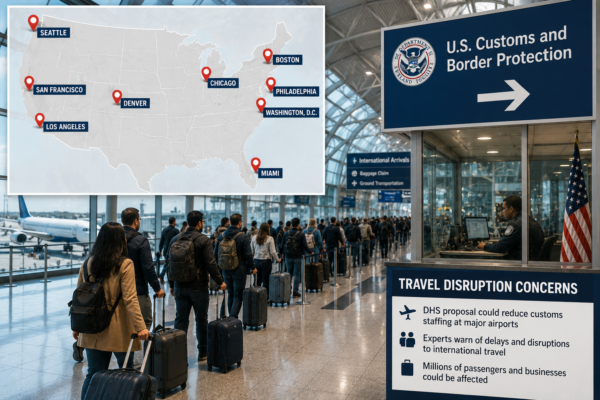
A new proposal being discussed by the Department of Homeland Security is raising alarms throughout the aviation and tourism sectors. Industry leaders are warning that changes to customs staffing at major airports could significantly disrupt international travel across the United States.
The proposal would allow Customs and Border Protection officers to be reassigned from airports located in jurisdictions commonly referred to as sanctuary cities. Supporters argue the move could help strengthen immigration enforcement efforts, while critics warn it could create widespread delays and logistical challenges for millions of passengers.
Because many of the nation’s busiest airports are located in these cities, experts say the impact on international travel could extend far beyond any single location.
Newark Emerges as the First Test Case
At the center of the debate is Newark Liberty International Airport in New Jersey. The airport has become an early focus of discussions after Homeland Security Secretary Markwayne Mullin suggested customs officers could be reassigned to assist federal immigration operations elsewhere.
The possibility has created concern among airlines, airport officials, and tourism organizations. Newark serves as one of the busiest gateways for international travel into the United States, handling thousands of passengers and large volumes of cargo every day.
Even a modest reduction in customs staffing could slow processing times, increase wait times, and create scheduling challenges for airlines operating international routes.
For travelers, that could mean longer lines, delayed arrivals, missed connections, and additional travel expenses.
Airlines Warn of Ripple Effects
One reason industry leaders are so concerned is the interconnected nature of modern aviation networks. International travel depends on precise scheduling, coordinated customs processing, and efficient passenger movement through airports.
If delays begin at one major hub, those disruptions often spread rapidly throughout the system.
Airline groups have warned that reducing customs staffing at even a handful of airports could affect flight schedules nationwide. Aircraft arriving late from one airport may delay departures elsewhere, creating a chain reaction that affects passengers across multiple states and countries.
Industry organizations representing airlines, cargo operators, and tourism businesses have urged federal officials to reconsider any action that could interfere with international travel operations.
Major Airport Hubs Could Be Impacted
The proposal has attracted attention because many airports potentially affected are among the largest international gateways in the country.
Cities frequently mentioned in discussions include New York, Los Angeles, Chicago, San Francisco, Boston, Seattle, Philadelphia, Denver, Portland, and Washington, D.C.
These airports collectively handle millions of international travel passengers each year. They also serve as major hubs for cargo shipments that support businesses and supply chains throughout the country.
Because so much international travel flows through these locations, even small operational changes could have consequences far beyond local communities.
Businesses that rely on efficient transportation of goods could face delays, while travelers may encounter longer processing times when entering the country.
Economic Consequences Could Be Significant
The travel industry contributes hundreds of billions of dollars to the U.S. economy annually. Hotels, restaurants, transportation providers, entertainment venues, and local businesses all depend on visitors arriving through international travel gateways.
Industry leaders warn that any policy that slows passenger processing could discourage tourism and reduce economic activity.
The concern comes at a particularly important time. The United States is preparing to host several major international events that are expected to attract large numbers of visitors from around the world.
Tourism organizations say maintaining smooth international travel operations will be critical to ensuring visitors have positive experiences and continue choosing the United States as a destination.
A significant disruption could affect not only travelers but also the businesses and workers who depend on tourism-related spending.
Cargo Operations Could Also Be Affected
While much of the attention has focused on passengers, international travel infrastructure also supports global trade.
Many of the airports under discussion process large amounts of international cargo each day. Products ranging from electronics and medical supplies to food and manufacturing materials move through these facilities.
If customs staffing levels are reduced, cargo processing could slow as well. Delays in shipments can create problems for businesses relying on timely deliveries and efficient supply chains.
Industry experts note that international travel and cargo operations are deeply connected. Disruptions affecting one area often create challenges for the other.
Political Debate Continues
The proposal is part of a broader debate over immigration enforcement and cooperation between federal authorities and local governments.
Supporters argue that federal resources should be concentrated in areas where immigration laws can be more effectively enforced. Critics counter that disrupting international travel could punish businesses, travelers, and local economies that have little connection to the underlying political disagreements.
Transportation Secretary Sean Duffy has publicly expressed concerns about the idea, arguing that air travel should not become entangled in political disputes.
His comments reflect growing divisions within government circles regarding how best to balance immigration enforcement priorities with transportation and economic considerations.
Uncertainty Creates Challenges
At the moment, no final decision has been announced.
White House officials have indicated that the proposal remains under review and that any eventual action would require presidential approval. Officials familiar with the discussions say no immediate implementation plans have been finalized.
Even so, uncertainty itself can create challenges for airlines and travel planners. Companies responsible for managing international travel schedules often make decisions months in advance. Questions about future staffing levels can complicate planning efforts and create additional concerns for carriers.
Tourism organizations say clarity will be important as businesses prepare for future travel demand.
Travelers May Wonder What Happens Next
For now, passengers should understand that no official policy changes have been implemented. International travel continues operating normally at airports across the United States.
However, the ongoing discussions have drawn attention to how important customs staffing is to the overall travel system. Efficient processing helps ensure travelers can move through airports quickly and safely while maintaining security standards.
If future policy changes occur, travelers may need to monitor airport updates and allow extra time when flying internationally.
In The Future
The debate over customs staffing highlights the complex relationship between immigration policy, transportation infrastructure, and economic growth.
Industry leaders continue to warn that reducing customs operations at major airports could create significant challenges for international travel, airlines, cargo companies, and tourism-dependent communities. Supporters of the proposal maintain that immigration enforcement priorities must remain a focus.
As discussions continue, millions of travelers, businesses, and airport operators will be watching closely. The future of international travel through some of America’s busiest gateways could depend on decisions made in Washington over the coming weeks and months.
Until then, the aviation industry remains focused on preserving reliable international travel services while policymakers weigh the potential consequences of any future changes.